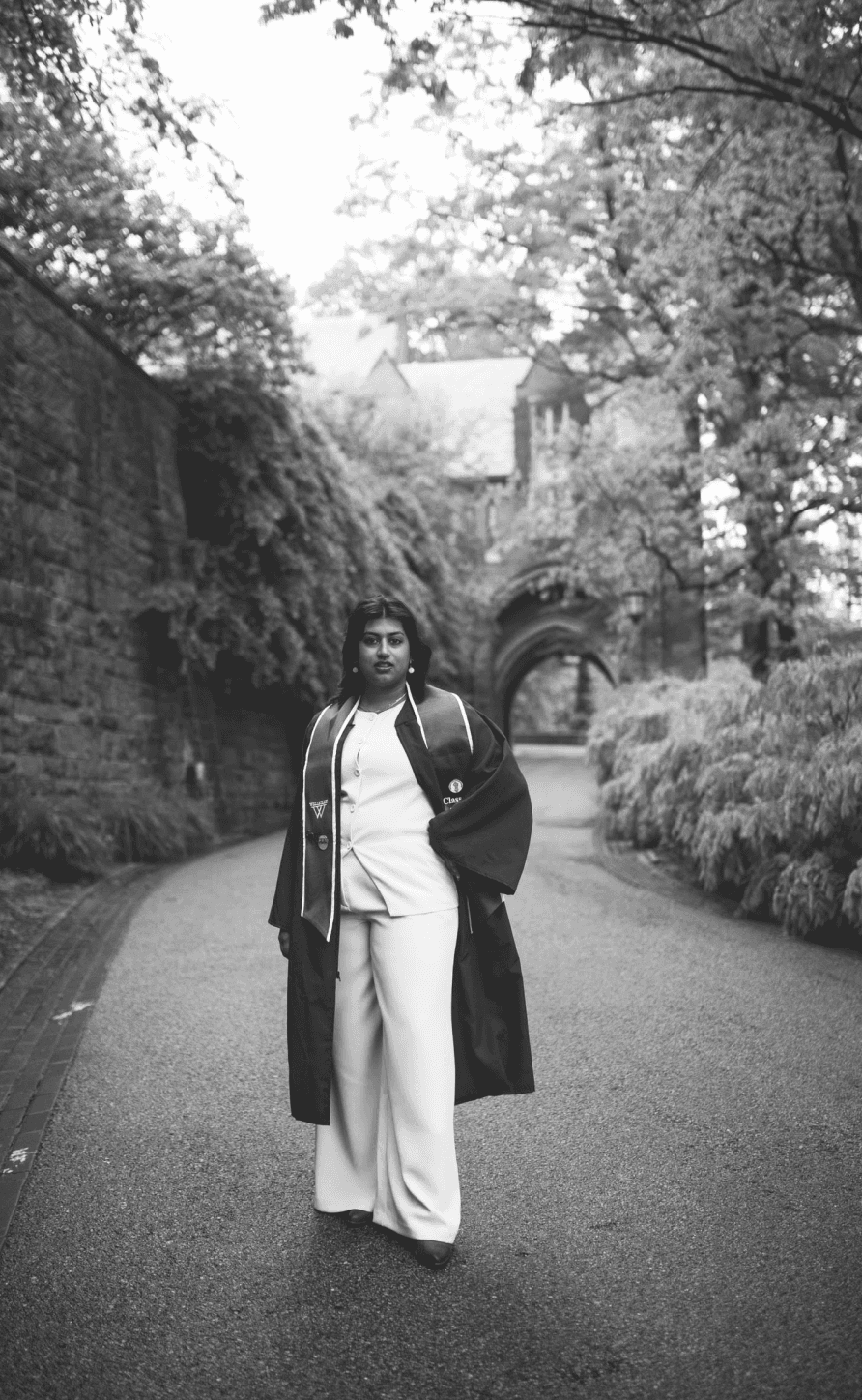
Hi! I’m Ahona Mukherjee,
a UX researcher & designer located in New York, NY passionate about creating thoughtful, inclusive digital experiences.
As a graduate of Wellesley College (2025) with a double B.A. in Women and Gender Studies and Media Arts and Sciences, I explore how technology can foster community and well-being—especially for underrepresented groups. My design approach combines curiosity, empathy, and structure, using research to drive intuitive and accessible solutions.
Most recently, I have completed a UX Research and Design Internship for Bosmos LLC and I’m currently earning a Google UX Design Certificate.
When I am not designing, you’ll find me learning crochet, gaming, logging a movie on Letterboxd, or finding inspiration through everyday interactions.
Accessibility & Research Approach
Accessibility is foundational to my research process, not an afterthought addressed only during usability testing. Centering accessibility at the research stage ensures a deeper understanding of user needs rather than relying on assumptions about what people with disabilities or diverse access needs may want. Without inclusive research, design risks serving the designer’s assumptions rather than the people it intends to support—particularly when marginalized communities are excluded from early discovery. My approach draws on the biopsychosocial model of disability, which recognizes that biological, psychological, and social factors all shape how people experience ability, impairment, and participation. Rather than pathologizing disability or framing certain bodies and minds as “deficient,” I aim to center the diversity of human experience and examine how systems, environments, and design choices can better accommodate that diversity.
In practice, this means respecting lived experience while conducting ethical and inclusive research. I prioritize recruiting participants with diverse identities and abilities, ensuring research environments are accessible and supportive through accommodations such as assistive technologies, translators, or flexible participation formats, and compensating participants fairly for their expertise and time. I am familiar with digital accessibility standards such as the Web Content Accessibility Guidelines (WCAG) and have experience considering assistive technologies including screen readers like JAWS, text-to-speech tools, AAC systems, eye-tracking devices, and alternative input methods. Accessibility also informs how I design research itself: inclusive recruitment and accessible participation allow me to gather richer insights, identify overlooked problems, and generate design recommendations that work across permanent, temporary, and situational disabilities. By centering accessibility in both research questions and research practice, I aim to produce insights that lead to more ethical, inclusive, and effective design outcomes.